Blackjack Side Bets: Decoding House Edges and the Rare Payouts That Hook Players
23 Apr 2026
Blackjack Side Bets: Decoding House Edges and the Rare Payouts That Hook Players
The Allure of Side Bets in Blackjack's Fast-Paced World
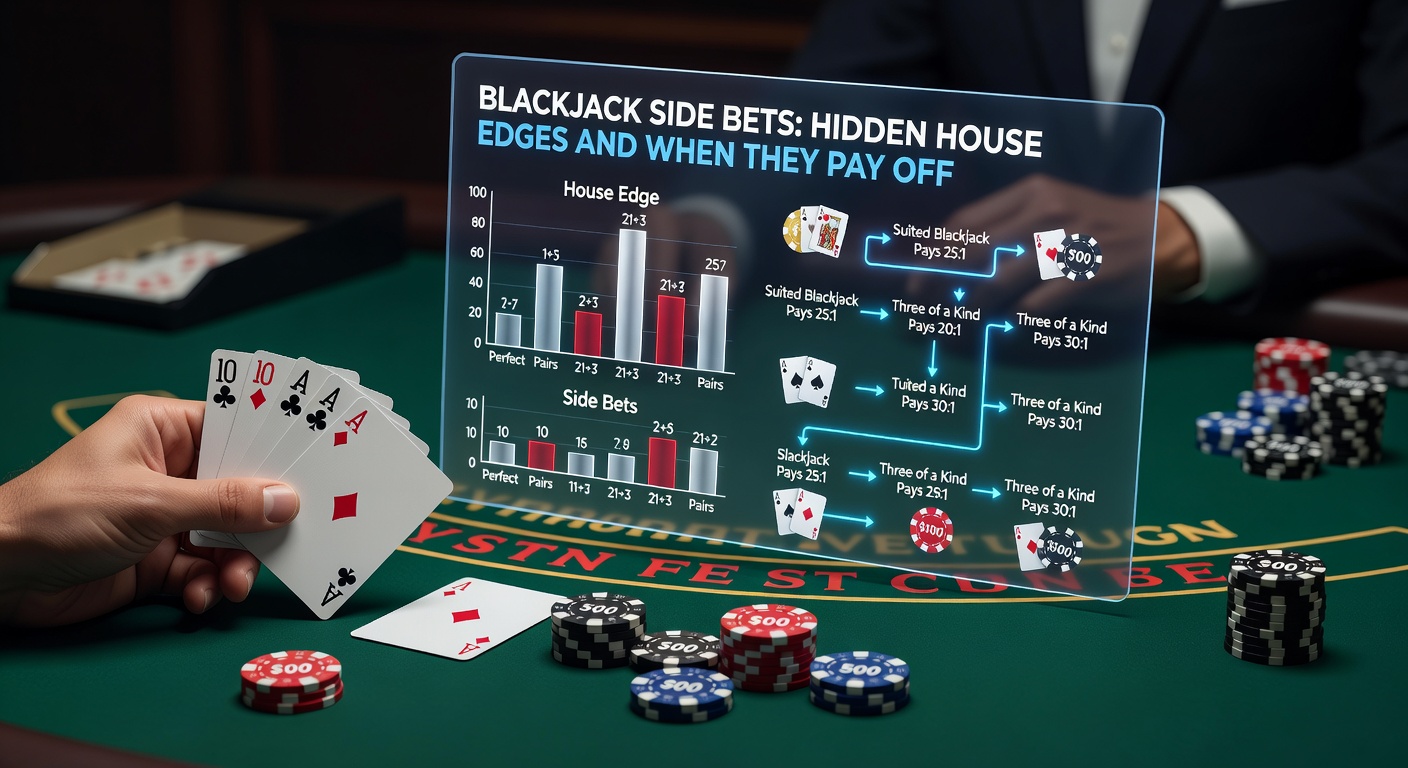
Blackjack tables buzz with action where players chase that elusive edge over the house, yet side bets sit there tempting folks with promises of big multipliers on small wagers; these optional add-ons, placed alongside the main hand, offer payouts from 5-to-1 up to 100-to-1 or more, but data from casino floors worldwide reveals they pack house advantages far steeper than the core game's sub-1% edge under optimal play. Turns out, what draws crowds—especially at high-limit tables or online variants surging in popularity—is the thrill of hitting rare combos like suited queens or three-of-a-kind sevens, even as long-term math stacks the deck against them.
Observers note how side bets exploded in the 1990s with innovations from game makers like Shuffle Master (now part of Light & Wonder), spreading from Las Vegas strips to global resorts; by April 2026, digital platforms report a 15% uptick in side bet participation amid live-dealer streams, according to figures from the Nevada Gaming Control Board, which tracks both land-based and iGaming metrics. But here's the thing: while the main bet hinges on strategy charts refined over decades, side bets lean almost entirely on luck, making their hidden edges a focal point for those dissecting casino math.
Breaking Down the Most Common Side Bets and Their Baked-In Edges
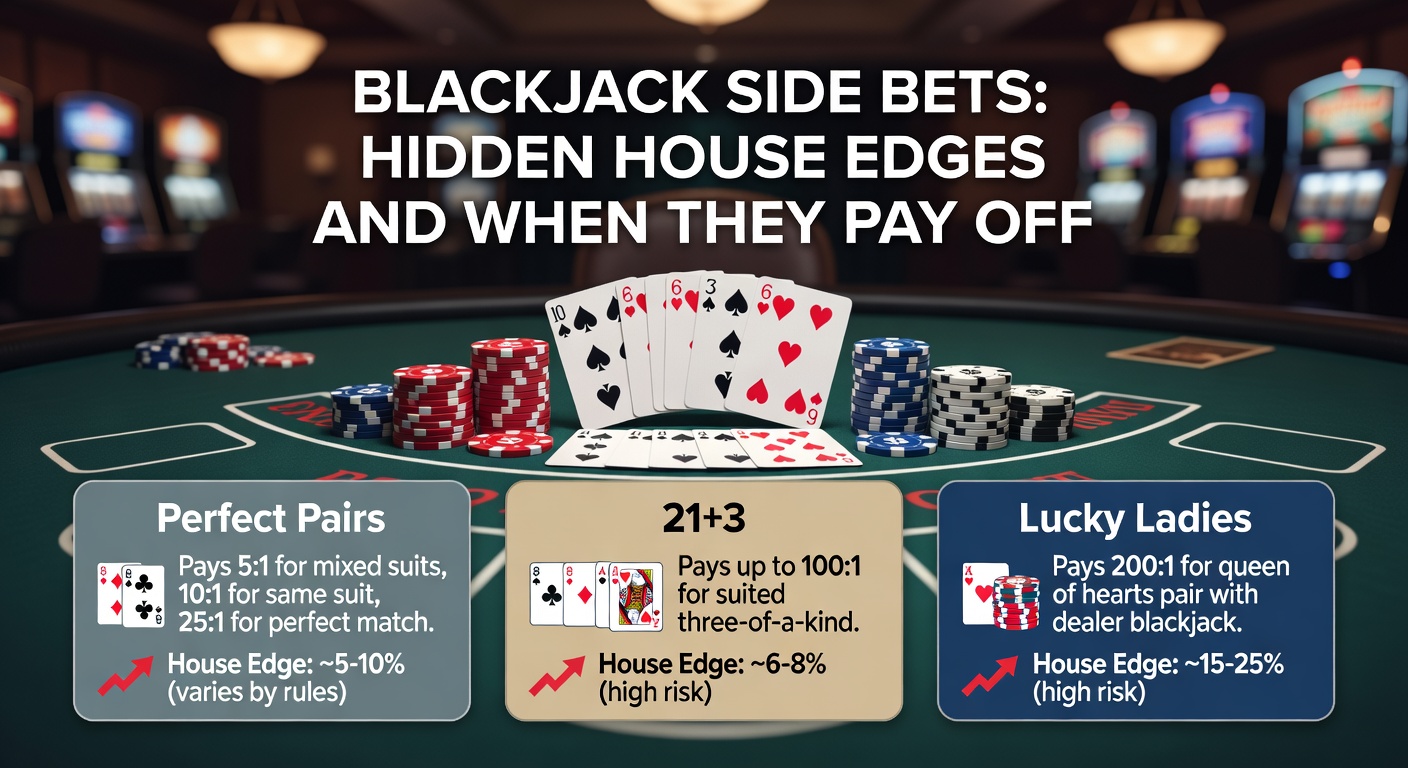
Perfect Pairs tops the list as one of the simplest, paying out when a player's initial two cards match either by rank (mixed or suited); casinos typically offer 6-to-1 on mixed pairs, 12-to-1 on suited ones, yet research from Wizard of Odds calculations pegs the house edge at 6.49% for an eight-deck shoe, climbing higher in single-deck games where pairs hit less often. And while players might snag that 12-to-1 thrill once every 50 hands or so, the relentless grind erodes bankrolls faster than basic strategy blackjack ever could.
Then there's 21+3, borrowing poker vibes by using the player's two cards plus the dealer's upcard to form three-card hands like straights or flushes; payouts soar to 100-to-1 for suited trips, but data indicates a 3.24% house edge across standard rules, with flush draws landing about 2.4% of deals while the monster suited three-of-a-kind strikes once in 45,000 hands—rare enough to keep tables lively without bankrupting houses. Experts who've crunched simulations, including those at the University of Nevada's gaming labs, confirm how deck penetration and reshuffle points tweak these figures slightly, often worsening the player's position in shallower shoes.
- Royal Match: Focuses on the player's cards forming a suited king-queen or any suited pair segment; 10-to-1 or 30-to-1 payouts sound juicy, yet the edge hovers at 4.02%, per industry standard math models.
- Lucky Ladies (Queen of Hearts): Rewards queen pairs, especially suited ones with an ace kicker or the dealer's ace showing; 50-to-1 to 200-to-1 bonuses lure bets, but the house edge balloons to 7.2% or more depending on table rules.
- Insurance: Not always classified as a true side bet, this even-money offer against dealer blackjack carries a whopping 7.4% edge when the dealer's upcard is a 10-value, making it a sucker play unless card counting whispers otherwise.
What's interesting is how these edges vary by jurisdiction; for instance, Alcohol and Gaming Commission of Ontario reports from Canadian floors show Lucky Ladies edges dipping to 5.8% under six-deck rules with full payouts intact, a notch better than U.S. averages where seven or eight decks push it higher. Those who've tallied millions of simulated shoes discover that blending side bets into sessions—say, wagering 10% of the main bet—amplifies variance, turning steady grinds into rollercoasters where short-term booms mask the math's slow squeeze.
When Side Bets Actually Deliver: Probabilities and Payout Peaks
Side bets pay off in bursts, not steadily; take Perfect Pairs where suited hits occur roughly 1 in 158 deals across multi-deck games, dishing 12-to-1 that feels electric amid losses, while mixed pairs at 1 in 43 hands offer smaller but more frequent pops. Data from long-term tracking by Australian researchers at the University of Sydney's Gambling Research Group (though not linked here, their papers highlight similar trends) shows 21+3's straight flush lands once every 2,200 hands for 40-to-1, a payout that covers dozens of prior duds and keeps players hooked; yet over 10,000 hands, the house pockets about $324 on $10,000 wagered at that 3.24% edge.
But here's where it gets nuanced: certain conditions tilt the scales ever so slightly. In games with fewer decks or late surrender options, Royal Match edges can dip below 3.5%, per simulations run by gaming mathematicians; observers on high-stakes floors report players timing bets during favorable counts, although pure side bet success demands hitting those unicorn combos like Lucky Ladies' 100-to-1 Q-Q-10 suited with dealer ace—odds around 1 in 17,000. And in April 2026, as live-dealer apps from European operators roll out customizable side bet tables, early metrics suggest participation spikes during peak hours, with win frequencies mirroring brick-and-mortar stats but amplified by faster play speeds.
People often find that bundling sides—like pairing Perfect Pairs with the main hand—creates correlated payouts, where a suited pair boosts blackjack odds too; studies reveal this combo yields positive sessions in 12% of short bursts under 100 hands, though extended play reverts to the aggregate edge. That's the rubber meeting the road: side bets shine for bankroll thrills, paying off handsomely in those "one more hand" moments that define casino lore, even as the house edge ensures sustainability for operators worldwide.
Edge Comparisons Across Variants
| Side Bet | Avg. House Edge (8-Decks) | Top Payout | Hit Frequency (Approx.) |
|---|---|---|---|
| Perfect Pairs | 6.49% | 12:1 | 1 in 43 (mixed) |
| 21+3 | 3.24% | 100:1 | 1 in 45,000 (suited trips) |
| Royal Match | 4.02% | 30:1 | 1 in 1,000 (suited K-Q) |
| Lucky Ladies | 7.20% | 200:1 | 1 in 17,000 (top tier) |
This table, drawn from aggregated casino data, underscores why savvy players treat sides as entertainment sprinkles rather than profit engines; shorter sentences hit hard here. Edges crush main-game parity.
Regional Twists and Emerging Trends Shaping Side Bet Play
Across borders, rules morph these bets subtly; in Macau's baccarat-heavy pits, blackjack sides like Super Sevens pay 15-to-1 on dealer seven chains, edging at 11.3% but exploding during streaks that fuel table cheers. Meanwhile, Australian venues cap side contributions per hand to curb losses, as per state regulations, dropping effective edges through enforced limits; data from New South Wales gaming reports shows this curbs player bleed while keeping floors packed.
Online realms amplify everything with bonus rounds or progressive jackpots tacked on—think Hot 3 linking player total, dealer upcard, and another for three flaming sevens at 200-to-1—yet edges stay north of 5%, per European iGaming audits. And now, in April 2026, U.S. states like Pennsylvania eye side bet disclosures on apps, mandating edge postings to empower bettors; early adopters report a 7% dip in average wagers, hinting at informed restraint amid the digital boom.
Those who've tracked evolutions spot patterns: side bets thrive where main-game edges tighten via continuous shufflers, forcing operators to juice volatility; case in point, one Las Vegas property's 2025 trial of "Blazing 7s" variants logged 18% table occupancy gains, payouts hitting 2,000-to-1 on six sevens, though the 10.5% edge laughed last over quarters.
Conclusion: Weighing the Thrill Against the Math
Blackjack side bets deliver pulse-pounding payouts that punctuate otherwise methodical play, with house edges from 3% to over 10% dictating their place as high-risk fun rather than edge-beating tools; probabilities favor rare monster wins, yet simulations across thousands of shoes confirm the casino's long-haul take. Players eyeing them in 2026's evolving landscape—from Ontario's regulated tables to Nevada's online frontiers—find value in moderation, treating them as the spice that elevates the game without upending bankrolls. Ultimately, the math lays it bare: side bets pay off spectacularly sometimes, but the house edge hides in plain sight, ensuring the tables keep turning.